Product Overview
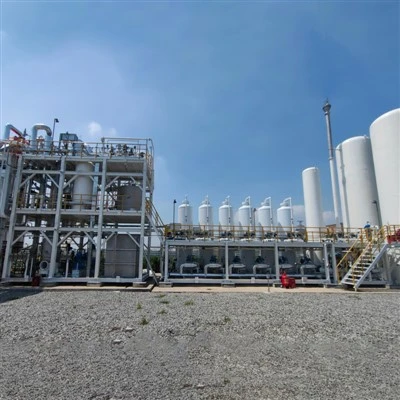
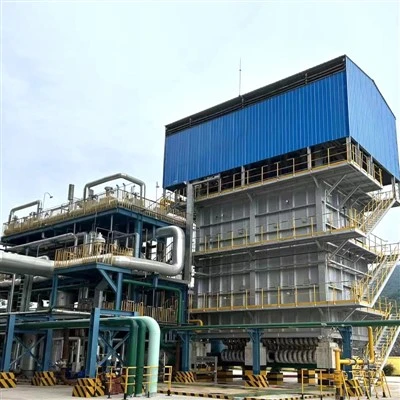
Hydrogenation Column is a high-pressure chemical reaction vessel designed for hydrogenation processes in refining, petrochemical, and fine chemical industries.
It enables controlled hydrogen–liquid–catalyst interaction under high temperature and pressure conditions, ensuring stable reaction performance and consistent product quality.
The equipment is engineered based on internationally recognized pressure vessel design codes such as ASME Section VIII and can be customized according to PED (EU Pressure Equipment Directive) requirements.
Parameter Data
|
Item / Property |
Standard Specification / Range |
|
Design Code |
ASME Sec. VIII Div. 1 / Div. 2, EN 13445 (PED) |
|
Design Pressure |
High Pressure (Customized based on process datasheets) |
|
Design Temperature |
High Temperature (Engineered per thermal design requirements) |
|
Inside Diameter (ID) |
Flexible heavy-duty configurations available |
|
Max Wall Thickness |
Heavy-wall fabrication available based on pressure calculations |
|
Max Lifting/Shipping Weight |
Large-scale modular fabrication capacity |
|
Base Materials |
SA387 Gr.11/22/91, Duplex/Super Duplex Stainless Steel, Carbon Steel |
|
Cladding/Overlay Material |
Inconel 625, SS347, SS316L (3mm - 5mm thickness) |
|
Corrosion Allowance |
As per process datasheet (e.g., 1.5mm - 3.0mm) |
Please Note: As an ASME-certified manufacturer, all our Hydrogenation Columns are 100% custom-engineered to match your specific process flow, chemical media, and local regulations. The parameters above represent our standard engineering capabilities.
Core Technical Capabilities
Custom-engineered using ASME-grade Cr-Mo steels (SA387 Gr.11/22/91) or Duplex alloys. Material limits strictly conform to API RP 941 (Nelson Curves) to eliminate High-Temperature Hydrogen Attack (HTHA) risks.
Integrates a 3mm to 5mm internal weld overlay of Inconel 625 or SS347 to shield the base metal against severe corrosion from hydrogen sulfide and organic acids.
Verified by rigorous leak and tightness testing per project specifications to ensure ultimate process safety and support environmental emissions control initiatives.
Built under the oversight of an ASME Authorized Inspector with material traceability backed by EN 10204 3.1 or 3.2 mill test certificates.
Typical Applications & Process Media
Our Hydrogenation Columns are custom-built to withstand severe service environments in refining, hydro-processing, and clean energy sectors, specifically targeting:
Process Units
Hydrotreating (HDT), Hydrocracking (HDC), Hydrodesulfurization (HDS), and Continuous Catalytic Reforming (CCR).
Corrosive Media
High-pressure hydrogen, hydrogen sulfide (H2S), sour water, amalgams, and organic acids.
Damage Mitigation
Specially engineered to resist High-Temperature Hydrogen Attack (HTHA), hydrogen-induced cracking (HIC), and sulfide stress cracking (SSC).
100% Non-Destructive Testing (NDT) & Inspection
Every Hydrogenation Column undergoes rigorous, documented quality assurance before leaving our facility:
Volumetric Testing
100% Radiographic Testing (RT) and Ultrasonic Testing (UT) compliant with ASME Sec. V.
Surface Testing
100% Magnetic Particle Testing (MT) and Dye Penetrant Testing (PT).
Pressure & Leak Proof
Hydrostatic Pressure Test at 1.25 to 1.5 times the design pressure, held for a minimum of 2 hours, monitored via calibrated digital gauges.
Third-Party Inspection (TPI)
Welcoming Bureau Veritas (BV), TUV, SGS, or Lloyd's Register for material traceability, welding log audit, and final stamp verification.
Advanced Engineering & Verification
Our engineering team utilizes industry-standard design and simulation software to ensure absolute compliance, structural longevity, and process safety before fabrication begins:
PV Elite / Compress: For precise ASME Section VIII Div. 1 & Div. 2 vessel design, shell thickness calculations, and flange ratings.
ANSYS (FEA): For Finite Element Analysis on high-stress areas, heavy nozzle loads, and complex thermal fatigue cycles.
AutoCAD & SolidWorks: For detailing 3D modular piping layouts, structural skids, and fabrication-ready shop drawings.
MDR Documentation Package
Materials
EN 10204 3.1/3.2 MTCs (All pressure parts)
Welding
WPS, PQR, and WPQR logs
NDT & Tests
100% NDT (RT/UT/MT/PT), PWHT charts, Hydro & Helium test logs
Stamps
TPI Release Note & ASME U/U2 Stamp certification
FAQ
Q: Which design codes and third-party inspections do you support?
A: We fabricate strictly to ASME Section VIII (Div. 1 & 2) with U/U2 stamps and CE-PED standards. We fully support third-party inspections by TUV, SGS, BV, and Lloyd's Register.
Q: How do you guarantee the quality of the internal anti-corrosion cladding?
A: We utilize automated strip overlay welding (Inconel 625/SS347) with a minimum thickness of 3–5 mm. To ensure metallurgical integrity, we enforce strict dilution control to maintain the required chemical composition of the cladding layer. Additionally, every square centimeter undergoes 100% Surface Dye Penetrant Testing (PT) and Volumetric Ultrasonic Testing (UT) to guarantee a flawless, disbonding-resistant bond.
Q: What testing documentation do you provide before shipping?
A: You will receive a complete MDR (Manufacturing Data Report) including EN 10204 3.1/3.2 material certificates, PWHT (Heat Treatment) charts, 100% NDT (RT/UT/MT/PT) reports, and third-party witnessed hydro-test and helium leak test logs.
Q: What are your maximum fabrication and lifting capacities?
A: As an ASME-certified manufacturer of heavy-wall vessels, our facility supports large-scale, heavy-tonnage fabrication. Since all columns are 100% custom-engineered, please share your specific weight, wall thickness, and diameter requirements with our team for an engineering review.
Hot Tags: hydrogenation column, China hydrogenation column manufacturers, Hydrogen Dispenser, Hydrogen Generation Device, Hydrogen Peroxide, Industrial Co Purification Technology and Equipment, Methanol Hydrogen Generator, PSA for Nitrogen Generation