Introduction
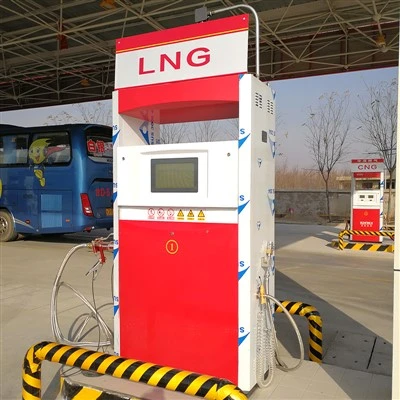
The Vertical LNG Cryogenic Storage Tank is a fixed industrial vessel designed to store liquefied natural gas at extremely low temperatures, typically around -162°C.
Product Parameters
|
Parameter |
Specification |
|
Gross Capacity |
50 – 250 m³ |
|
MAWP (Max Allowable Working Pressure) |
0.8 / 1.2 / 1.6 MPa |
|
Height-to-Diameter Ratio |
Customizable per site layout |
|
Standard Outer Diameter |
≤ 3,500 mm (medium units) |
|
Minimum Order Quantity |
1 unit |
|
Annual Production Capacity |
Up to 120 tanks/year |
|
Shell Thickness Tolerance |
Zero negative deviation permitted |
|
Dry Weight & Center of Gravity (CoG) |
Laser-marked on nameplate |
Technical Performance
|
Parameter |
Specification / Range |
|
Boil-Off Rate (BOR) |
0.12% – 0.15% / day (for 100 m³ capacity) |
|
Insulation System |
High-vacuum multi-layer insulation (super-insulation) |
|
Thermal Bridge Control |
Automated precision tension-wrapped structure |
|
Vacuum Level (Factory Sealed) |
≤ 0.05 Pa |
|
Vacuum Measurement Method |
Calibrated digital Pirani gauge verification before shipment |
|
Vacuum Maintenance System |
External tamper-resistant vacuum evacuation port |
|
Getter System |
Palladium-based catalytic getter panels for hydrogen adsorption |
|
Thermal Operating Range |
Stable performance up to 45°C ambient temperature |
|
Vacuum Retention Warranty |
5-year structural vacuum guarantee |
Industrial Applications

Industrial Energy Supply: Direct pipeline integration for heavy industry (paper mills, glass foundries) replacing coal or heavy fuel oil infrastructure.
Peak-Shaving Support: Rapid-injection high-pressure storage for municipal utilities and grid peak-shaving stations during emergency supply deficits.
Marine Bunkering: Shore-to-ship and terminal storage fully compliant with IGC/IGF codes and international port authority safety mandates.
Off-Grid Energy: Remote fuel storage engineered for commercial mining fleets and isolated power generation grids operating in arctic conditions down to -40°C.
Quality Control
Weld Non-Destructive Testing (NDT): 100% Radiographic Testing (RT) on all inner vessel longitudinal and circumferential butt welds, executed by ASNT Level II/III certified technicians.
Vacuum Integrity: Helium mass spectrometer leak testing on the fully assembled inner vessel, ensuring a verified leak rate of< 1 × 10⁻⁹ Pa·m³/s to guarantee long-term vacuum retention.
Pressure & Thermal Verification: Pneumatic proof testing at 1.15× design pressure, hydrostatic testing, and mandatory Post-Weld Heat Treatment (PWHT) for all heavy-walled pressure boundary components.
Material & Insulation: Dual-layer containment utilizing SA-240 Type 304/304L stainless steel (inner) with 100% EN 10204 Type 3.1 MTR heat-number traceability, and Q345R or SA-516 Grade 70 carbon steel (outer jacket) finished with a 300-micron marine-grade epoxy coat for C5-M coastal environments, supported by low-conductivity FRP rods.
Welding Qualifications: All pressure boundary welding procedures and operators are qualified strictly to ASME Section IX and EN ISO 15614-1 standards.
Engineering Delivery Services
Turnkey Logistics: Execution of heavy-haul permitting, multi-axle transport route clearance, and specialized port/site crane rigging coordination.
EPC Design Integration: Provisioning of certified civil foundation reaction loads, anchor bolt layouts, and localized wind/seismic shear calculation packets.
Site Commissioning: On-site vacuum field verification, system nitrogen purging, and controlled cryogenic cool-down monitoring by field engineers.
O&M Documentation: Complete English-language Operations & Maintenance manuals, including localized statutory compliance and annual safety inspection checklists.

Compliance & Certifications
ASME Certification
Full compliance with ASME Section VIII Division 1 and Division 2, code-stamped with official "U" and "U2" designators and registered with the National Board (NBBI).
European Compliance
CE marking under the European Pressure Equipment Directive (PED 2014/68/EU) utilizing AD2000 and EN 13458 design and construction standards.
Authorized Audits
Annual manufacturing facility and process verification maintained under active Lloyd's Register, TÜV SÜD, or SGS surveillance.
FAQ
Q: What is the expected service life of this LNG storage tank under continuous industrial operation?
A: The design service life is 20–25 years under standard LNG station duty cycles. Major pressure-bearing components are fatigue-designed with scheduled inspection intervals every 5 years.
Q: How long does it take from order confirmation to on-site commissioning?
A: Typical lead time is 10–14 weeks for manufacturing, followed by 2–3 weeks for transportation, installation, and commissioning. For urgent projects, production priority scheduling can shorten fabrication by approximately 10–15%.
Q: What is the actual field-proven thermal stability over time?
A: In typical LNG station environments, boil-off performance remains within design range for the first 5–7 years. After this period, performance is mainly influenced by maintenance conditions rather than structural degradation.
Q: What happens if vacuum performance gradually decreases after long-term use?
A: The system includes a monitored vacuum maintenance interface that allows controlled re-evacuation if performance deviation is detected. In most cases, corrective maintenance restores thermal efficiency without requiring structural replacement.
Q: Are there real-world projects where this tank has been successfully deployed?
A: Yes, the system has been deployed in industrial LNG stations and off-grid energy supply projects in both coastal and inland regions. Typical applications include peak-shaving stations and remote industrial fuel supply systems.
Q: Can the tank operate reliably in extreme climate conditions?
A: Yes, the system is designed for ambient temperatures up to 45°C and cold-region operation down to -40°C.
Q: What are the main operational risks and how are they controlled?
A: The primary risks are vacuum degradation and valve system leakage. These are mitigated through continuous pressure monitoring, redundant sealing design, and scheduled inspection protocols.
Q: What is the total cost of ownership (TCO) over a 10-year operation period?
A: Most operating cost comes from periodic inspection, valve maintenance, and instrumentation calibration. Compared with above-ground pressurized storage, the system reduces energy loss costs due to low boil-off design.
Hot Tags: vertical LNG cryogenic storage tank, China vertical LNG cryogenic storage tank manufacturers, Cryogenic Submerged Centrifugal Pump immersed Type, High flow LNG Refueling Pump Skid, LNG All in one Filling Station, LNG Refueling Station LNG Horizontal Storage Tank , Single Nozzle LNG Dispenser, Vertical LNG Cryogenic Storage Tank