Introduction
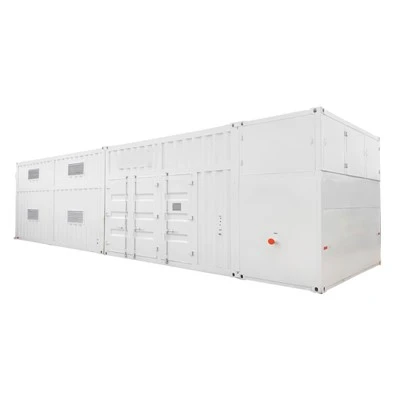
The Natural Gas Pressure Regulation and Metering Skid (PRMS) is an integrated, skid-mounted system designed to safely receive high-pressure natural gas from transmission pipelines, reduce it to a stable operating pressure, and accurately measure the volumetric flow rate.
Product Specifications
|
System |
Technology |
Standard |
Accuracy |
|
Ultrasonic Metering |
4-path / 8-path ultrasonic meter |
AGA Report No.9 |
±0.5% or better |
|
Turbine Metering |
Gas turbine meter |
AGA Report No.7 |
±0.7% typical |
|
Flow Computer |
Dual redundant flow computer |
AGA 3 / AGA 8 |
Real-time calculation |
|
Gas Quality Measurement |
Online gas chromatograph |
ISO 6976 |
Continuous BTU value |
|
Pressure & Temperature Compensation |
RTD sensors + smart transmitters |
AGA 8 Z-factor correction |
Continuous correction |
|
Calibration System |
External certified flow loop calibration |
ISO/IEC 17025 |
Certified deviation report |
Technical Specifications
|
Function |
Technical Configuration |
Standard / KPI |
Performance / Limit |
|
Overpressure Protection |
Active + standby monitor regulators + slam-shut valves |
ASME B31.8 safety design margin |
Isolation response < 2.0 s |
|
Shut-off Performance |
Control valves with bubble-tight sealing |
ANSI/FCI 70-2 Class VI |
Zero leakage at shut-off |
|
Pressure Stability Control |
Pilot-operated regulator system |
Internal control tolerance |
±1% lock-up pressure |
|
Gas Cleanliness Requirement |
Multi-stage separation + pilot protection design |
System compatibility requirement |
Clean, dry gas recommended for stable operation |
|
Gas Filtration |
Dual multi-cyclone separator system |
Particle separation standard |
99.9% removal down to 3 microns |
|
Noise Control |
Acoustic insulation + silencer trim system |
OSHA occupational noise guideline |
≤85 dBA at 1 meter |
Applications & Industry Use Cases
Gas-Fired Power Plants
Fuel gas supply skids for up to 400MW gas turbines, reducing pipeline pressure from 70 bar to a stable 25 bar.
01
Chemical & Fertilizer Facilities
Continuous feed gas conditioning for ammonia and methanol synthesis loops within tight pressure tolerances of ±0.1 bar.
02
Heavy Industrial Burners
Flow scaling from 500 Nm³/h to 12,000 Nm³/h for steel mills and glass plants, preventing burner flameouts by holding pressure stability within ±5%.
03
LNG Regasification Terminals
High-pressure regulation and metering up to 100 bar for ambient-temperature natural gas before commercial grid injection.
04
Biomethane Grid Injection
Low-flow, medium-pressure skids integrated with gas chromatographs for real-time gas quality analysis, fiscal metering, and network injection.
05
Engineering Customization
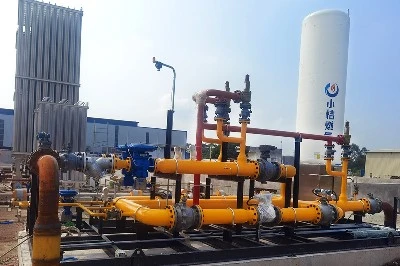
Our engineering team delivers project-ready 3D structural models within 15 business days, enabling parallel foundation construction and verifying tie-in spacing before delivery.
Factory-programmed flow computers communicate natively via Modbus TCP/IP, Profibus, or Ethernet/IP with pre-mapped data registers for direct DCS integration.
The skid utilizes a 100% duty/standby configuration with automatic, PLC-triggered changeover that activates if inline pressure or flow variance exceeds preset parameters.
Structural frames and protective enclosures are custom-engineered to withstand environmental extremes from -40°C to +55°C.
Manufacturing & Quality Control
Butt welds on high-pressure gas lines undergo complete radiographic testing (RT) per ASME B31.8 prior to structural assembly, executed by ASME Section IX and AWS D1.1 certified welders with permanent stamp identification for full traceability.
Assembled piping networks are pressure tested hydrostatically at 1.5 times the maximum design pressure with a minimum hold time of 4 hours.
QC team verifies alloy components and valves using handheld XRF analyzers for Positive Material Identification (PMI) to cross-check metallurgical compliance against Mill Test Reports (MTRs).
To prevent Corrosion Under Insulation (CUI) in coastal environments, we apply SA 2.5 near-white metal blasting followed by a specification three-coat epoxy system (320 microns total DFT), extending the time to first major maintenance (TSFM) to 10+ years.
We compile and deliver the turnkey Quality Book-containing MTRs, NDT logs, traceable weld maps, code calculations, and calibration sheets-concurrently with equipment shipment.
Factory Acceptance Testing (FAT)
Technicians conduct cold loop testing across all I/O points between field instruments, solenoids, and the central flow computer panel to validate safety logic and high/low pressure trips before the skid leaves our floor.
Post-hydrotest pneumatic leak testing is performed using nitrogen gas at maximum operating pressure to verify bubble-tight integrity and comply with local fugitive emission mandates.
Our quality team uses laser-tracker scanning on the finalized skid to verify anchor-bolt coordinate accuracy to eliminate onsite alignment rework.
Electrical circuits undergo comprehensive continuity, insulation resistance, and high-potential (Hi-Pot) testing across all power distribution and grounding networks.
Compliance & Certifications
A certified holder of ASME U (Pressure Vessels) and PP (Pressure Piping) stamps, enabling deployment for North American oil & gas and utility capital projects under ASME code requirements.
Design and manufacturing processes comply with Pressure Equipment Directive 2014/68/EU, supporting CE marking via Module H for gas transmission and distribution applications within the European Union.
Fusion welding processes are controlled under an ISO 3834-2 certified welding quality management system, ensuring traceable welding procedures and documented process control across all pressure-containing assemblies.
Emergency shutdown (ESD) instrumentation loops are implemented using components certified to IEC 61508 SIL 2 or SIL 3, depending on risk classification and project safety integrity level requirements.
Full access is provided for external inspection agencies such as DNV, Lloyd's Register, TÜV, and Bureau Veritas during defined manufacturing hold points, supported by complete manufacturing and quality documentation packages.
FAQ
Q: What is the typical delivery time from order confirmation to shipment?
A: Standard production lead time is 10–14 weeks, depending on configuration and testing scope. For urgent projects, partial pre-assembly and expedited FAT scheduling can shorten this to around 8–10 weeks.
Q: What warranty period is provided for the PRMS system?
A: The system is typically covered by an 18–24 month warranty from commissioning or 24 months from shipment, whichever comes first. Critical components such as regulators and flow computers follow separate OEM warranty terms.
Q: How is the system packaged and protected during international shipping?
A: Each skid is fixed on a reinforced steel export frame and protected with anti-corrosion wrapping and moisture barrier film. Sensitive instruments are additionally shock-mounted and vacuum-sealed when required.
Q: What payment terms are normally accepted for international orders?
A: Standard terms are 30% advance payment and 70% balance before shipment after FAT approval. For long-term partners, LC at sight or milestone-based payment structures can also be arranged.
Q: How long does on-site installation and commissioning usually take?
A: Typical installation takes 5–10 days depending on pipeline readiness and site conditions. Full commissioning including loop checks and calibration usually requires an additional 3–5 days.
Q: What kind of after-sales support is available after commissioning?
A: Remote technical support is available within 24 hours for troubleshooting and system diagnostics. On-site engineer dispatch is typically arranged within 3–7 working days if required.
Q: How often does the system require calibration or inspection?
A: Flow measurement systems are generally recommended for calibration every 12 months. In high-value fiscal metering applications, some operators choose 6–9 month verification cycles.
Q: Are spare parts available for long-term operation?
A: Critical spare parts such as sensors, regulators, and valve kits are maintained with a minimum 10-year supply commitment. Emergency replacement kits can be shipped within 72 hours for common configurations.
Q: Can the system be integrated into existing control or SCADA systems?
A: Yes, it supports standard industrial communication protocols and can be mapped directly to most DCS/SCADA platforms. Pre-engineered data tags reduce integration time during commissioning.
Hot Tags: natural gas pressure regulation and metering skid, China natural gas pressure regulation and metering skid manufacturers, lng vaporization station, LNG Vaporization Station Equipment, LNG Vaporization Supercharger, Natural Gas Pressure Regulation and Metering Skid